
Unlocking the Heartbeat: The Rhythmic Power of African Instruments
The Architects of Groove: How Iconic African Percussion and Fela Sowande's Insight Defined a Sound.

Ever wondered what gives African music, including the global phenomenon of Afrobeats, its undeniable groove? It's all in the rhythm, driven by a captivating interplay of instruments that form the very heartbeat of the sound.
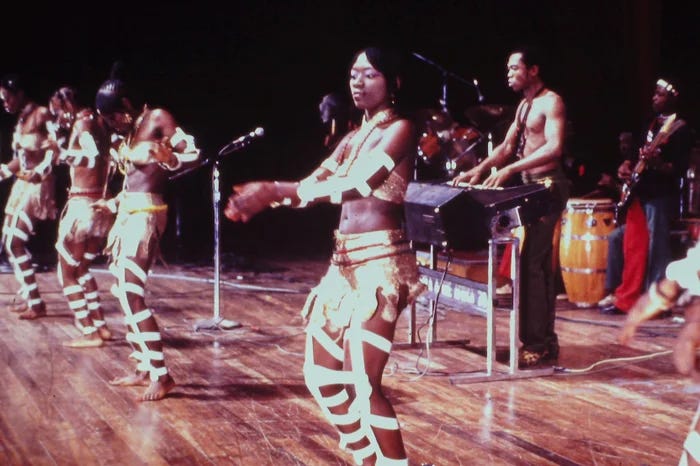
Fela Kuti with dancers during the 1979 tour. Photograph: Lou Carnevale
Let's quickly break down the rhythmic magic they create:
The Cowbell: Not just a simple clang, the cowbell (like the agogô) often lays down the key pattern – a precise, guiding rhythm that anchors the entire piece. It's the silent conductor that keeps every other intricate beat in sync.
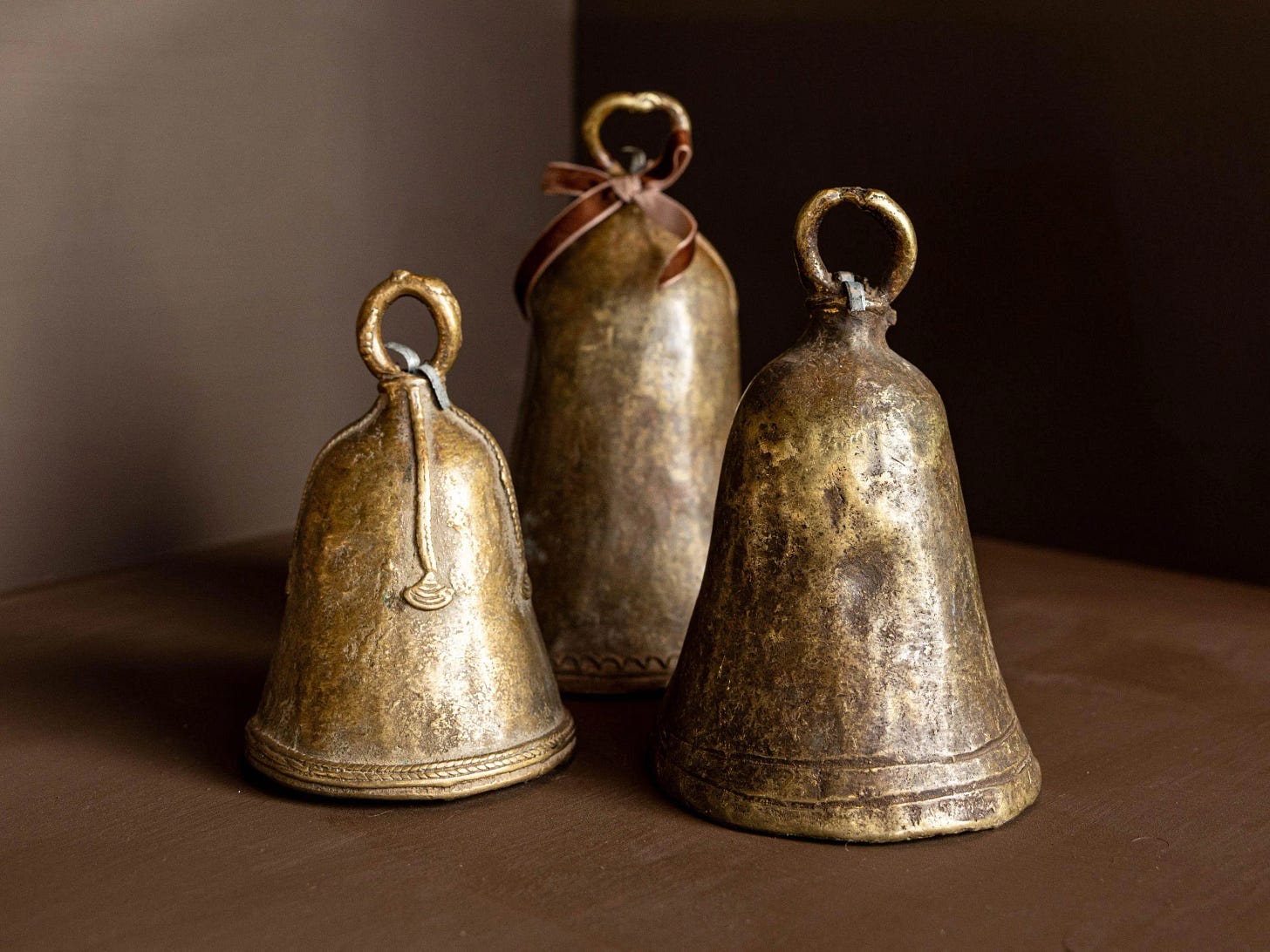

Antique Brass African Cow Bells
The Shekere: This beaded gourd brings layered textures and intricate shuffles. Its shakes, slaps, and twists add a vibrant, percussive shimmer, weaving complex patterns over the main pulse.
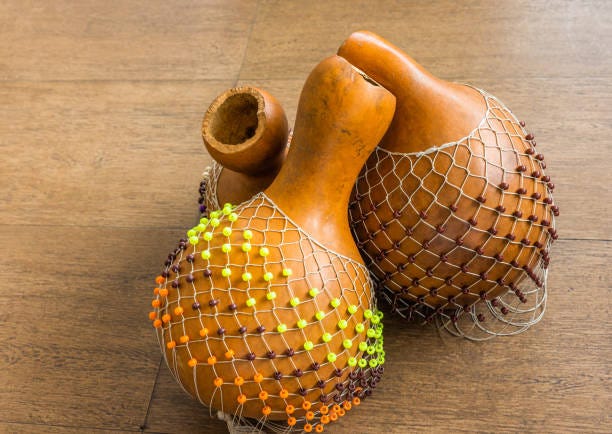
Shekere image from Conjuring the Calabash
The Kalango (Drum): As part of the drum family, the kalango contributes to the polyrhythmic backbone, where multiple, independent rhythms interlock to create a dense, mesmerizing whole. It's often involved in the dynamic call-and-response patterns.
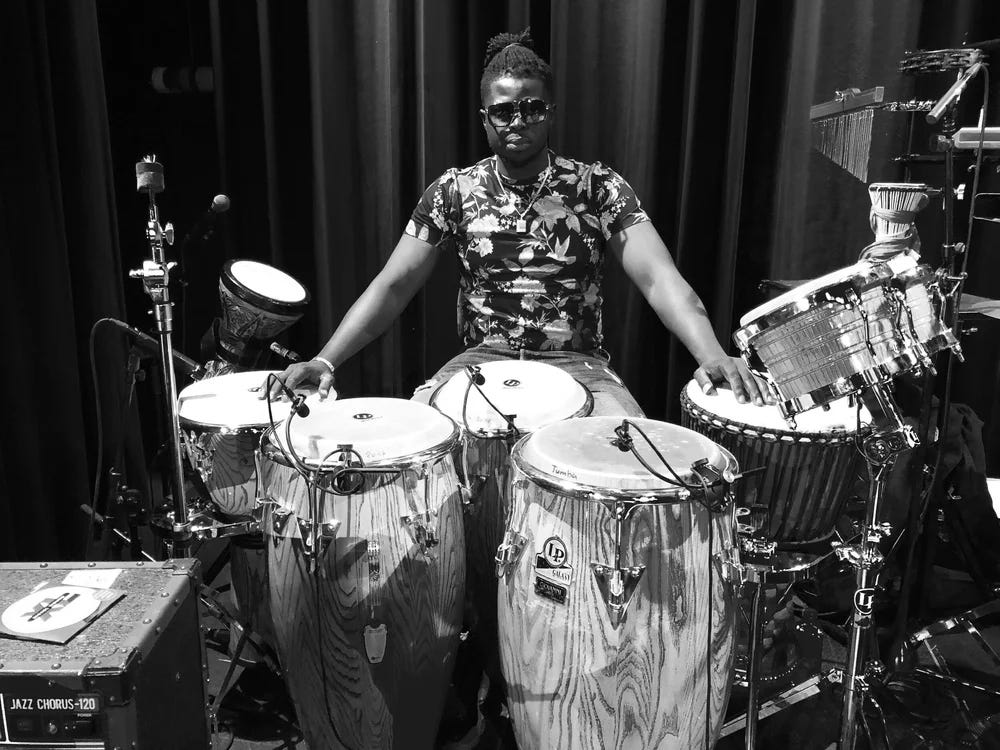
Image of Kalango Drum being played by Magatte Fall- Percussionist for Angélique Kidjo, Black Panther
The Talking Drum: The true marvel! This drum mimics human speech through pitch modulation, adding not just rhythm but communicative melodies and rhythmic dialogues. It can literally "speak" to the dancers and musicians, guiding the flow and energy of the music.
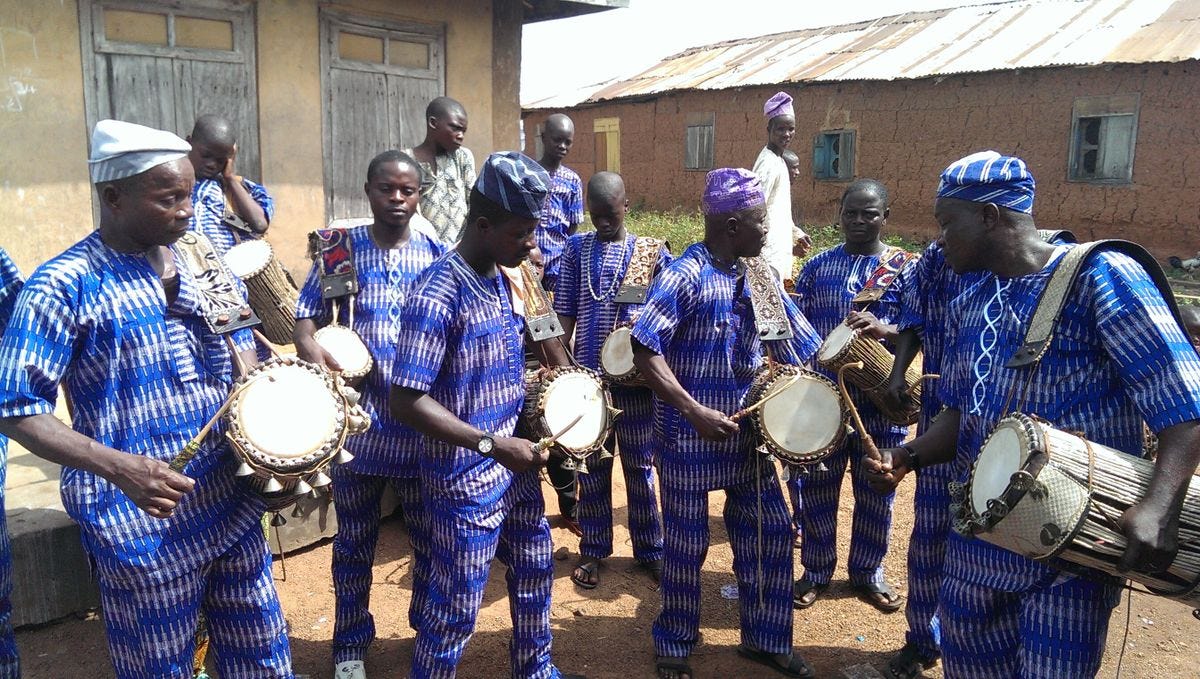
The Talking drum from The Ifesowapo dùndún ensemble performing in Igbo Ora, southwest Nigeria
Fela Sowande: A Pioneer's Insight
Understanding the profound depth of these rhythms wasn't always mainstream, especially in Western academic circles. This is where Fela Sowande (1908-1987) stands out as a crucial figure. As a renowned Nigerian composer, organist, and musicologist, he meticulously studied and integrated these traditional African rhythmic and melodic structures into his classical compositions.
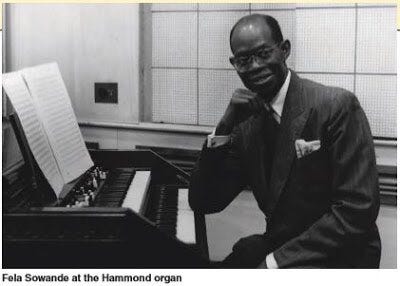
Sowande's work was instrumental in elevating the understanding and appreciation of African rhythmic concepts. He didn't just play these instruments; he delved into the mathematical precision and spiritual depth of their contributions, showcasing how these seemingly simple beats formed sophisticated, intricate tapestries. His efforts helped bridge the gap between traditional African music and global audiences, laying foundational knowledge for generations who would come to explore, blend, and create genres like Afrobeats.
The rhythmic genius of these instruments, deeply understood and celebrated by pioneers like Fela Sowande, continues to drive the infectious, undeniable sound of African music today